Bench Rotations Reshaping Live Wagering Windows in League and Cup Encounters
Written by Henrik Schmitt · Nov 8, 2026
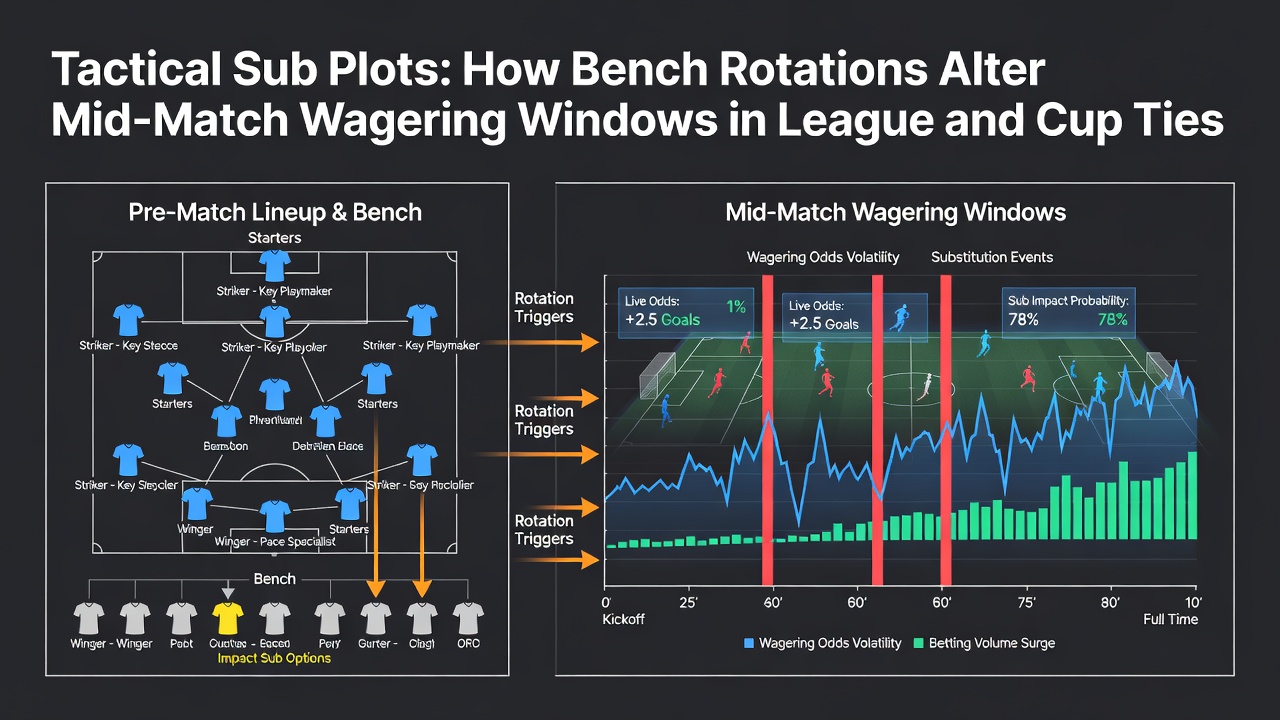
Bench Rotations Reshaping Live Wagering Windows in League and Cup Encounters
Coaches adjust lineups through substitutions at set intervals and those decisions frequently coincide with adjustments in live betting markets across major European competitions. Data from the 2025-26 season shows that teams in the Premier League and UEFA Champions League introduced an average of 3.2 changes per 90 minutes with timing clustered between the 55th and 75th minutes. Observers note that such patterns create distinct windows where odds on goals, cards, and total shots shift within seconds of the official announcement.
Timing Patterns and Market Reactions
Leagues track substitution data through official timing systems and researchers at institutions like the University of Loughborough have compiled figures indicating that 68 percent of impactful changes occur after the hour mark. When a defensive midfielder enters the field the probability assigned to under 2.5 goals often tightens by 4 to 7 percentage points according to aggregated exchange data. In cup ties the effect appears more pronounced because squads carry deeper benches yet face higher stakes per fixture. Mid-November 2026 schedules feature several midweek domestic cup rounds where rotation frequency rises due to congested calendars and analysts record quicker odds movements in those windows compared with weekend league games.
Player Profiles and Statistical Shifts
Individual player metrics drive the size of the adjustment. When an attacking full-back replaces a centre-back the expected goals for the team on the ball increases on average by 0.18 per 30 remaining minutes based on Opta-derived models. Bettors and bookmakers both react to these inputs; live platforms update lines for next goalscorer markets within 90 seconds of the change. In the EFL Championship similar substitutions produce smaller absolute movements yet comparable percentage shifts because baseline odds sit at higher values. Those studying historical data sets find that cup competitions amplify the effect further when extra time becomes a possibility and rotation decisions carry implications for both 90-minute and 120-minute outcomes.
League Versus Cup Distinctions
League fixtures often feature more predictable rotation schedules tied to fixture congestion while cup ties introduce greater variability. Figures released by the German Football League for the 2025-26 campaign reveal that Bundesliga sides averaged 2.9 changes per match in league play compared with 3.7 in DFB-Pokal ties. The additional rotation correlates with wider spreads in live over/under markets during the second half. In November 2026 several clubs face three matches in eight days and managers have publicly discussed planned bench usage to manage player load which in turn supplies advance signals to those monitoring pre-match lineups and warm-up activity.
What's interesting is how these patterns interact with weather and travel factors already priced into opening odds. When a high-pressing side loses its primary defensive midfielder the live line on corners awarded to the opponent drifts outward because expected territorial dominance increases. Exchange operators report that trading volume spikes immediately after the fourth official raises the substitution board and remains elevated for three to four minutes while new information propagates through automated models and manual traders alike.
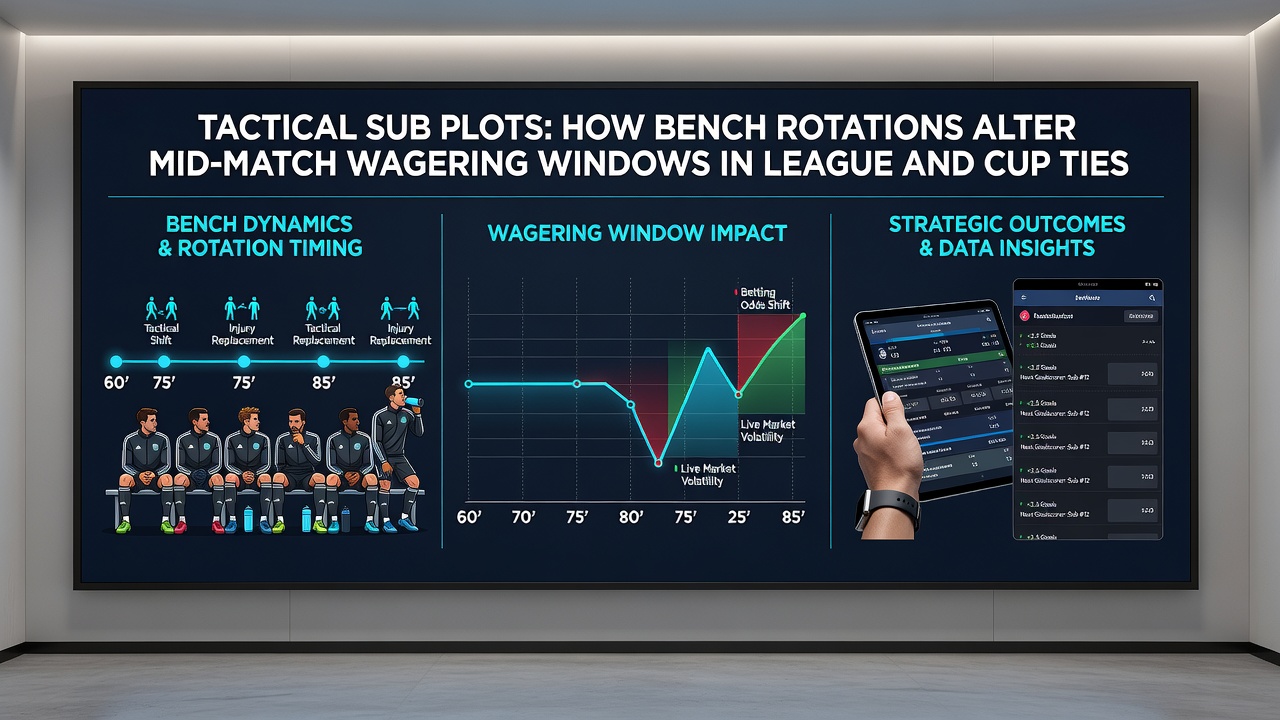
Data Sources Informing Market Models
Industry reports from bodies such as the European Gaming and Betting Association compile anonymised transaction volumes that illustrate the concentration of activity around substitution events. A 2024 paper from Monash University examined 1,200 matches across five leagues and concluded that substitution-driven odds volatility accounts for roughly 12 percent of total in-play movement in matches decided by a single goal. Those datasets also highlight regional differences: Australian A-League fixtures show slower incorporation of bench information owing to lower broadcast coverage and fewer dedicated trading desks. Canadian Soccer Association match logs provide parallel evidence that domestic cup games produce sharper corrections because squad depth varies more widely between participants.
Coaches who favour early changes to disrupt opposition shape create secondary effects on card markets. Introducing a player with a high foul rate per 90 minutes can widen the over 3.5 cards line by 5 to 8 points within the first minute of the change. Historical records from the 2024-25 season demonstrate that such movements occur consistently across both home and away environments although the magnitude remains larger when the substituting team trails and requires a more aggressive posture.
Conclusion
Substitution timing and player selection generate measurable and repeatable shifts in live wagering windows during both league and cup fixtures. Aggregated performance data, timing statistics, and transaction records confirm that markets respond within defined intervals after each change and that the scale of movement differs between competition types. November 2026 schedules will again test how clubs balance squad management against the immediate implications those decisions carry for in-play pricing across Europe's primary football markets.